Home Alumni Staff Undergraduate Postgraduate Profile Department MSP News Hamburger...
Read MoreIPB University Professor: Mussel Waste Piles Threaten Cilincing Coastal Ecosystem
Recent Post ...
IPB University Professor: Mussel Waste Piles Threaten Cilincing Coastal Ecosystem
Home Alumni Staff Undergraduate Postgraduate Profile Department MSP News Hamburger...
Read MoreShare
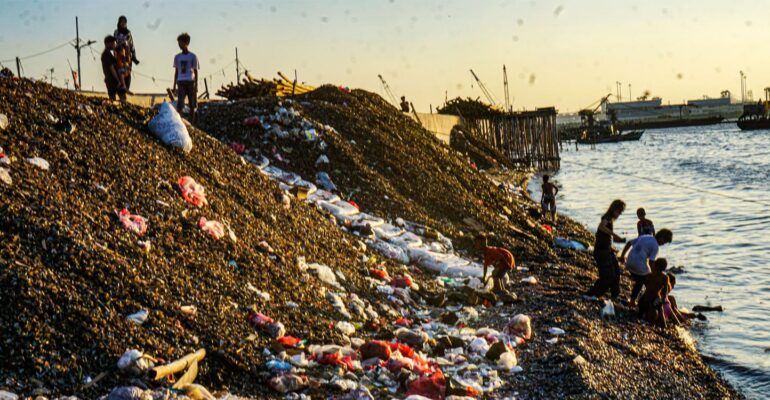
IPB University researcher, Prof. Etty Riani, believes that the mountain of green mussel shell waste in the coastal area of Cilincing, North Jakarta, could pose a threat to the existing ecosystem.
“This accumulation of organic waste not only disrupts the aesthetics of the environment, but also threatens coastal ecological stability and public health,” said Prof. Etty, a Professor at the Faculty of Fisheries and Marine Sciences (FPIK) at IPB University.
She explained that the organic material from green mussel shells undergoes decomposition by microorganisms. This process is amplified by physical factors such as the heat of the sun and chemical reactions with seawater. Over time, the shells degrade, decay, and release various inorganic compounds into the environment.
“When these inorganic materials or nutrients are released in excessive amounts, several water quality parameters can exceed quality standards. This condition causes seawater quality to decline,” said Prof. Etty.
Furthermore, high nutrient concentrations have the potential to trigger eutrophication (uncontrolled phytoplankton growth). At night, phytoplankton require oxygen for respiration, plus oxygen for the decomposition of organic matter.
“At night, dissolved oxygen levels in the water can drop drastically. If this continues, this condition can cause the death of various aquatic biota, even triggering mass die-offs,” he stressed.
Heavy Metal Contamination
Research by Prof. Etty and her team on green mussels in Jakarta Bay, including the Cilincing area, shows that both the shells and the mussel meat contain a number of dangerous heavy metals such as Hg, Pb, Cd, Cu, Cr, and Zn.
With the accumulation of shells reaching 1–4 tons per day, Prof. Etty assesses that the risk of heavy metal contamination in soil, water, and coastal sediments is increasing sharply.
“Heavy metal contamination doesn’t stop in the soil or sediment. These hazardous materials can be absorbed by mangrove roots, stems, and leaves, and transferred to other aquatic biota through feeding or biomagnification, ultimately endangering the health of humans, who are consumers of various marine biota,” he explained.
If left untreated for a long time, these heavy metals have the potential to cause physiological disorders, organ damage, reproductive failure, and even birth defects in the offspring of aquatic biota. Furthermore, compacted shell piles can damage soil and sediment structure, permanently reducing ecological quality.
Besides ecological impacts, shell piles can also trigger the emergence of disease vectors. “I haven’t found any studies that indicate shellfish or fish around the dump site are contaminated with pathogenic bacteria. However, in general, waste piles like this usually become breeding grounds for flies, parasites, and other pathogens that can harm public health,” said Prof. Etty.
She emphasized that green mussel shells should not be simply dumped in coastal areas. She encouraged the establishment of a dedicated waste disposal site to prevent environmental pollution or disease transmission.
Prof. Etty also cautioned that shells should not be used for human consumption, biota feed, or fertilizer as long as they still contain heavy metals, unless the shells are treated with special technology to remove these hazardous and toxic substances.
As a circular economy-based solution, she recommended the use of shells for non-consumption products.
“The cleaned shells have attractive colors and have the potential to become valuable craft materials. They can also be used as a substitute for CaO or CaCO₃ in concrete, bricks, paving blocks, and other materials,” he concluded.
More News in Category: